Cargo intake and serialization
Dual intakes collected cargo and fed it into the serializer, which organized the flow toward the shooter.
Competition robotics · 2022 & 2023
Electrical and mechanical leadership across two competition seasons, with ownership of the 2023 laterator design.
01
Team 254 built Sideways for the 2022 Rapid React season and Breakdown for 2023 Charged Up. Sideways collected and shot cargo and climbed at endgame; Breakdown manipulated cones and cubes using an elevator, laterator, and gripper.
I worked across mechanical design and electrical integration, with responsibility for the 2023 laterator and substantial contributions to the overall robot CAD.
02
03
Sideways combined swerve drive, two full-width intakes, a cargo serializer, a turreted shooter with an adjustable hood, and a traversal climbing mechanism. These systems supported a strategy centered on fast cargo cycles and a strong endgame.
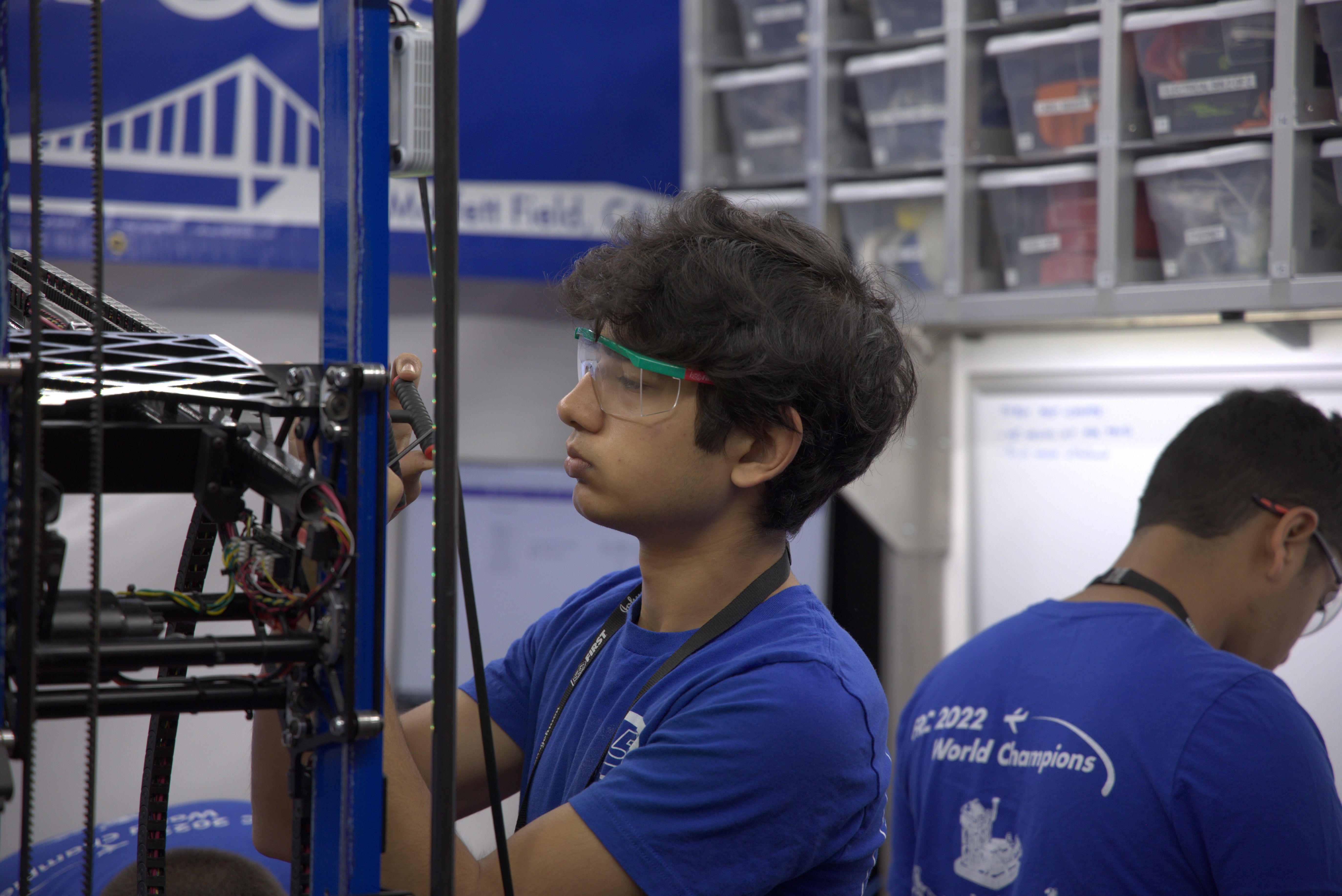
As an electrical and mechanical lead, I contributed across the build and integration process. My work connected mechanical hardware with the electrical systems needed to operate it, alongside the ongoing assembly and troubleshooting that came with preparing the robot for competition.
Dual intakes collected cargo and fed it into the serializer, which organized the flow toward the shooter.
The turret and adjustable hood allowed the scoring system to respond to changing robot positions.
Swerve drive supported maneuverability and efficient movement between tasks.
The climber, reaction arm, and extending stinger worked together to reach the traversal rung.
Being part of that season showed me how much competition performance depends on the preparation behind it: careful integration, testing, maintenance, and people willing to keep working through problems.
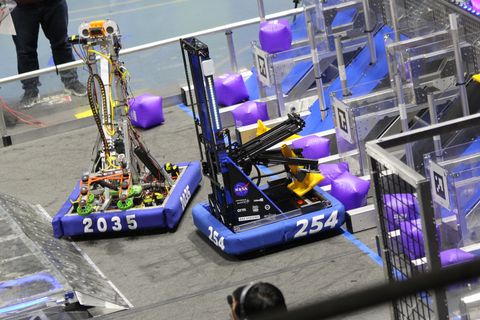
Breakdown used a vertical elevator, an extending laterator, and a distal gripper to position cones and cubes for scoring. The robot also incorporated a ground intake, swerve drive, and deployable forks.
In 2023, I owned the laterator design, served as electrical lead, and contributed extensively to the CAD and overall mechanical design of the robot. This gave me responsibility for a major mechanism while remaining closely involved with the systems around it.
Our robot finished as the highest-ranked robot worldwide by OPR. That accomplishment reflected the combined work of the team across mechanisms, controls, driving, strategy, and competition support.
OPR is a statistical estimate of scoring contribution, distinct from championship results.
The laterator provided the robot’s extending reach, carrying the gripper outward from the elevator. Coordinating vertical positioning with horizontal extension allowed the robot to reach scoring locations while retaining a compact retracted pose.
Owning the laterator meant thinking beyond the nominal extended and retracted positions. I worked through the mechanism’s CAD, packaging, and interfaces while considering how it connected to the elevator, gripper, and complete robot.
The design needed to balance reach, stiffness, mass, and assembly complexity. Because the gripper sits at the end of the extension, its mass and loading affect the behavior of the entire mechanism.
The team’s published technical discussion describes a three-stage laterator using carbon-fiber tubes and lightweight rolling bushings. It also documents structural challenges and reinforcement changes during the season.
That development process reinforced an important lesson for me: selecting lightweight materials is only part of the problem. Joint details, contact loads, assembly methods, and unexpected impacts also determine how well a mechanism survives.
Electrical leadership was a major part of my contribution across both seasons. Working on both mechanical and electrical systems gave me a broader view of the robot: a mechanism’s design affects where its wiring can run, how components can be accessed, and how easily the assembly can be maintained.
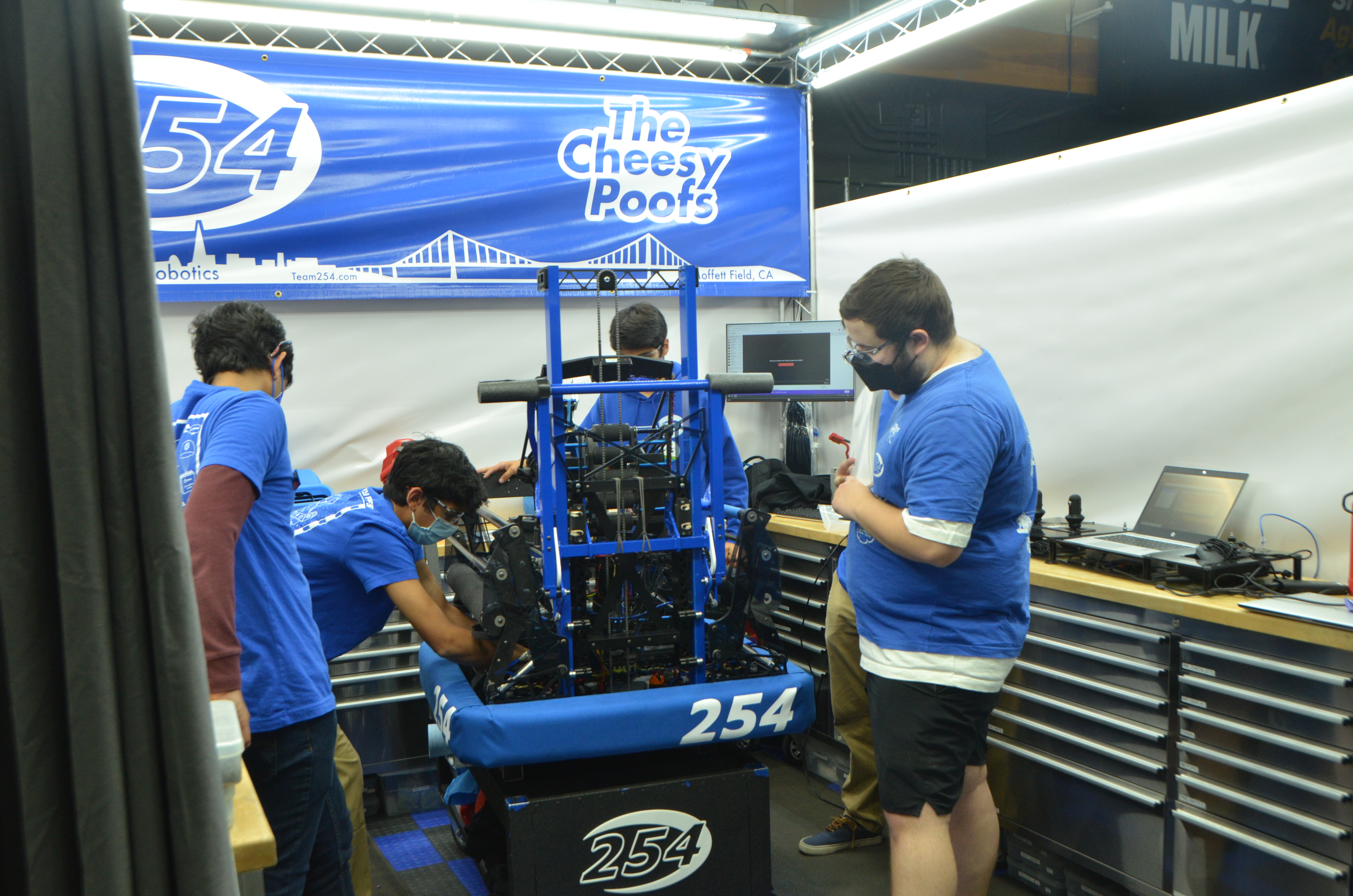
I contributed substantial time to the physical build and integration process, working with the team to connect mechanical development with the electrical implementation. In 2023, I combined that role with laterator ownership and significant contributions to the overall robot CAD.
These seasons helped me understand why electrical access, moving connections, and serviceability need attention while the mechanical design is still taking shape.
Competition was the visible part of a much larger effort. The workshop and event work—building, checking, adjusting, and getting ready to run again—was where I spent much of my time.
04
Team 254 won the 2022 FIRST World Championship. In 2023, Breakdown ranked first worldwide by OPR, a statistical estimate of scoring contribution. Both were team achievements.
My contributions included electrical leadership in both seasons, mechanical leadership in 2022, and laterator ownership and substantial overall CAD work in 2023.